
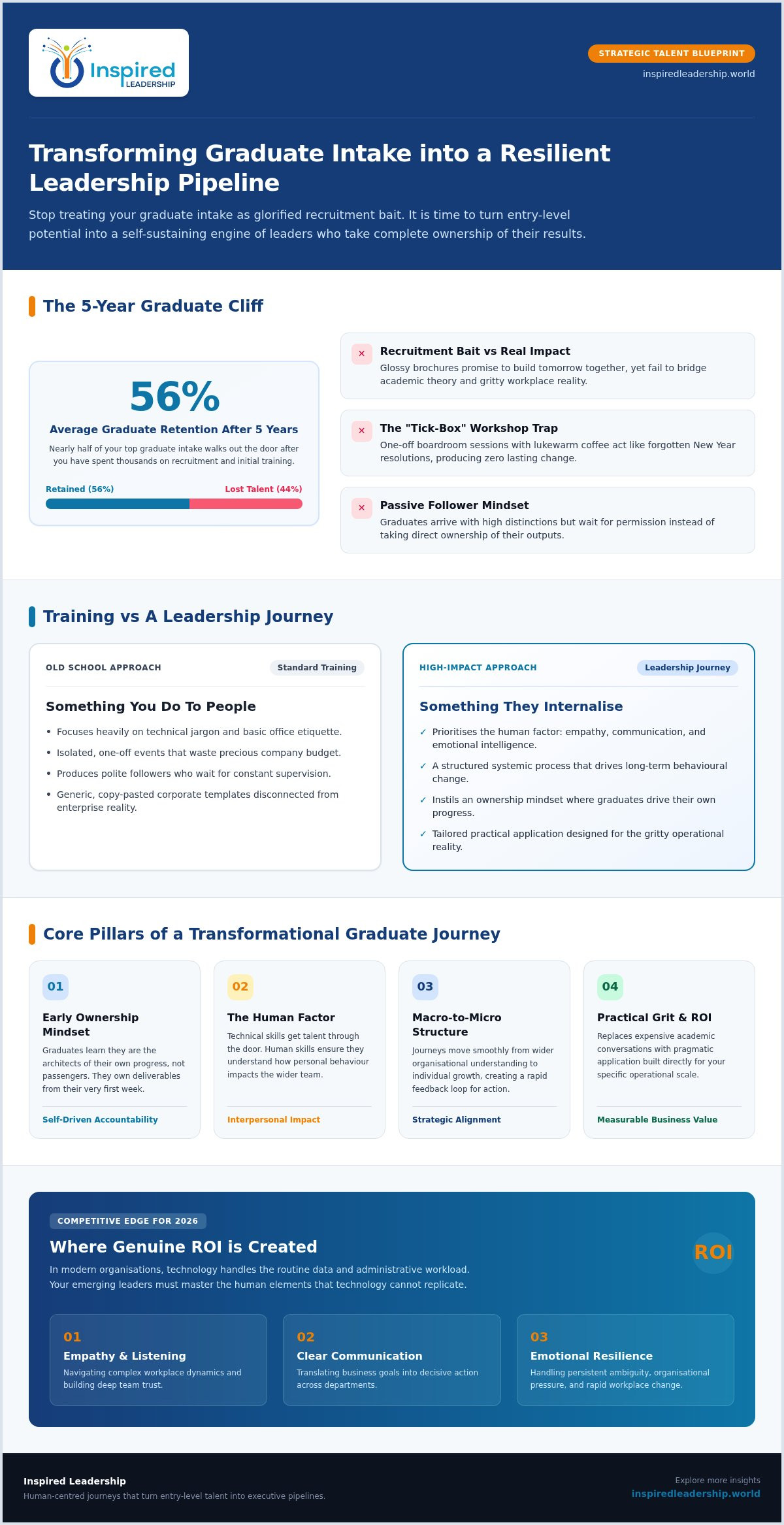
Did you know that average graduate retention drops to just 56% after five years? You’ve likely felt the sting of watching a promising hire walk out the door after you’ve spent thousands on their recruitment and initial training. It’s a common frustration when a traditional graduate development program fails to bridge the gap between university theory and the gritty reality of your workplace.
You want more than just a warm body in a chair or someone who stays just long enough to finish the free fruit bowl. We’re going to show you how to transform your entry-level intake into a powerhouse leadership pipeline that delivers a tangible return on your investment. By focusing on ownership and human factors, you can stop the revolving door of talent for good.
This guide explores how to move beyond tick-box exercises and create a structured journey that builds genuine human skills. We’ll look at the specific frameworks that turn high-potential graduates into the resilient leaders your organisation needs to thrive. It’s time to build a pipeline that actually sustains your business strategy.
Key Takeaways
- Stop treating your graduate development programme as glorified recruitment bait and start using it as a strategic engine to fix your future leadership vacuum.
- Prioritise human-centred skills over technical jargon to ensure your graduates can actually navigate the messy reality of your organisation.
- Select a development journey that understands the grit of a medium-sized enterprise instead of relying on a generic, one-size-fits-all corporate template.
- Discover how a results-driven leadership journey turns entry-level potential into a self-sustaining pipeline of future executives who take ownership of their results.
Beyond the Recruitment Hype: What a Graduate Development Program Should Actually Achieve
Most businesses treat their graduate development program like a shiny fishing lure designed to snag the brightest sparks from university. It’s easy to get distracted by the glossy brochures and the promise of “building tomorrow together” without ever defining what that actually means. You need to look deeper to see if the investment actually builds leadership capability or just teaches basic office etiquette.
A true journey should bridge the gap between academic theory and the gritty reality of corporate ownership. We’ve seen too many graduates arrive with high distinctions but zero understanding of how to own their outputs from day one. By integrating robust leadership development frameworks, you can move beyond simple orientations and start building a real pipeline.
The goal isn’t to create a cohort of polite followers who wait for permission. It’s to develop people who think for themselves and take responsibility for their results. This transition from student to professional requires a shift in mindset that most traditional training simply ignores.
The Difference Between Training and a Leadership Journey
Training is something you do to people; a journey is something they experience and internalise. One-off workshops are often a spectacular waste of your precious budget because they rarely lead to lasting behavioural change. They’re like a New Year’s resolution that’s forgotten by February.
Effective early career development sets the tone for a person’s entire professional life. It requires a systemic approach rather than a “tick-box” afternoon in a boardroom with lukewarm coffee. You want a process that sticks, transforming high-potential individuals into the resilient leaders your organisation needs.
Essential Components of a Transformational Graduate Journey
To move beyond a generic graduate development program, you must prioritise human skills over technical jargon. Whilst technical ability gets them through the door, it’s their ability to navigate complex workplace dynamics that keeps them there. A successful journey focuses on the “Human Factor” to ensure graduates understand how their behaviour impacts the wider team.
Effective journeys are structured to move from macro organisational understanding to micro individual growth. This creates a feedback loop where new insights translate into immediate action within your business. Such architectures are essential for robust succession management and leadership pipelines that protect your company’s future.
You should ensure there is a clear mechanism for translating these theoretical insights into tangible results. Without this bridge, you’re simply paying for expensive conversations that don’t change how your business operates. Practical application is the only way to ensure your investment actually sticks.
Developing an Ownership Mindset Early
Graduates need to learn that they are the architects of their own progress, not just passengers in your company. We find that work readiness programs are vital for bridging the gap between university degrees and the reality of a professional desk. This shift in perspective ensures they take responsibility for their outputs from their very first week.
If you want to see how this mindset shift fits your specific team, feel free to contact Inspired Leadership for a chat. We can help you identify the friction points currently slowing down your entry-level talent.
The Role of Human Skills as a Competitive Advantage
Whilst AI handles the data and routine administrative work, your graduates must handle the people, the politics, and the pressure. In 2026, the real drivers of organisational ROI are empathy, communication, and emotional intelligence. These human skills are the only way to build a workforce that can thrive amidst persistent ambiguity and change.
How to Choose a Journey That Future-Proofs Your Leadership Pipeline
Selecting a graduate development program requires a discerning eye for practicality over prestige. You don’t need a copy-pasted model from a global consultancy that doesn’t understand the specific pressures of a medium-sized enterprise. Look for a partner who prioritises tangible organisational results over the superficial “happy sheets” handed out at the end of a session.
It’s vital to baseline your talent before you begin. A robust leadership assessment allows you to see exactly where your graduates are starting from. This data-driven approach ensures the journey challenges them to step out of their comfort zones whilst remaining aligned with your unique corporate culture.
Many leaders find that structured rotational development programs help graduates gain a holistic view of the business. This cross-functional exposure is key to building a pipeline that can actually lead. It turns passive observers into active participants who understand how the whole machine works.
A Strategic Guide to Graduate Recruitment and Development
You can find more in-depth planning tips in our graduate recruitment and development guide. One of the smartest moves you can make is teaching leadership skills to technical experts before they even need them. This prevents the common tragedy of brilliant technical minds quitting because they feel stagnant or ill-equipped for future management roles.
If you’re already thinking ahead, our guide on graduate recruitment strategy 2027 can help you connect your attraction and selection process directly to the capabilities your organisation will need next.
Avoiding the “Tick-Box” Development Trap
If a development journey feels like a chore to your graduates, you have already lost the battle for their hearts and minds. They can smell a corporate “tick-box” exercise from a mile away. You should seek out bespoke journeys that feel authentic, slightly quirky, and deeply personal to your organisation’s mission.
Why the Emerging Leader Journey is Your Secret Weapon for 2026
Our Emerging Leader Journey is built for the next generation of talent who want more than just a payslip. It’s a results-driven alternative to the traditional graduate development program, focusing on building capability at scale across your entire organisation.
We don’t do boring PowerPoint decks or theoretical fluff that gets forgotten by lunchtime. You get a partner who acts as a pragmatic architect of change, ensuring your investment actually shifts the needle on performance. This is about real-world impact that transforms how people show up at work.
It’s about taking that raw graduate potential and refining it into a leader who thinks, acts, and owns their results. We help them move from passive participants to active contributors who understand the weight of their own impact. When graduates take ownership, your management burden decreases significantly.
Building the Talent Pipeline from the Ground Up
This approach is a core part of a wider talent pipeline development strategy. By starting early, you prepare your graduates for the eventual transition into our manager to leader journey. This creates a seamless progression that keeps your best people engaged for the long haul.
You’re not just filling seats for the current quarter. You’re building a sustainable leadership engine that will power your business for years to come. It’s a strategic insurance policy against future talent shortages and the high cost of external executive recruitment.
Next Steps: Secure Your Future Leaders
The best time to start developing your 2027 leaders was yesterday, but today is a very close second. Don’t let your brightest sparks fade away because they lacked a structured path to growth. You can take the first step right now by heading to our dedicated journey page.
It’s time to stop guessing and start growing your future executives with a plan that actually works. To get started, you should:
- Download the brochure for the Emerging Leader Journey.
- Review the curriculum with your senior leadership team to identify key gaps.
- Book a consultation to tailor the experience to your specific business needs.
Transform Your Talent Into a Strategic Asset
Building a robust graduate development program is no longer about just filling vacancies with bright sparks. It requires a shift from passive training to an active leadership journey that prioritises human skills and genuine ownership. You’ve seen how focusing on the “Human Factor” can bridge the gap between academic theory and corporate reality.
If you’re ready to see the impact of this approach, you can read our leadership coaching testimonials from organisations that have already made the switch. You should also download our Emerging Leader Journey brochure for a detailed breakdown of the curriculum. It’s time to stop settling for high turnover and start investing in leaders who actually deliver results.
The future of your organisation depends on the people you grow today. We can’t wait to help you build a leadership pipeline that finally makes sense for your business. Let’s get to work.
Frequently Asked Questions
What is a graduate development journey?
A graduate development journey is a structured, long-term developmental path that transforms entry-level talent into accountable, self-governing leaders. Unlike a standard graduate development program that focuses on basic office orientation, this journey emphasises human factors and an ownership mindset. It bridges the gap between academic theory and corporate reality by teaching graduates how their behaviour directly impacts the wider organisation’s success.
How long does a typical graduate leadership journey last?
Most comprehensive journeys run for 12 to 24 months to allow for deep behavioural change and the application of new skills. This duration provides enough time for graduates to move through different business areas whilst internalising core leadership principles. It’s not a quick-fix afternoon workshop; it’s a methodical process of building capability at scale across your entire organisation.
How do you measure the ROI of a graduate development program?
You measure the return on investment of a graduate development program by evaluating retention rates and the speed of commercial productivity. According to 2026 industry benchmarks, replacing a lost early-career hire can cost upwards of £30,000. By reducing turnover and building a self-sustaining leadership pipeline, you significantly lower recruitment costs and ensure graduates take full ownership of their outputs.
What is the difference between a graduate scheme and a leadership journey?
A graduate scheme is often a recruitment lure focused on technical rotation, whereas a leadership journey is a strategic intervention to build future executive capability. Whilst schemes often focus on getting people through the door, a journey focuses on keeping and growing them through human-centred development. It moves beyond tick-box exercises to actually prepare graduates for the messy reality of organisational leadership.
Why should medium-sized enterprises invest in formal graduate development?
Medium-sized enterprises should invest because they cannot afford the high cost of talent leakage to larger global competitors. A formal journey allows you to stop technical experts from quitting by teaching them leadership skills before they reach a crisis point. It future-proofs your business by creating a resilient pipeline of homegrown talent who understand your unique culture and values.