

What if preventing executive burnout isn’t about getting better at carrying pressure, but changing the conditions that keep adding to it? If you’re still making decisions, supporting your team and meeting expectations, it can be difficult to notice when sustained strain is affecting your judgement, energy or relationships. That doesn’t mean you’ve failed.
You may already know that rest and healthy boundaries matter. The harder question is whether your habits, the demands of your role or the way your organisation works need to change. Burnout isn’t simply a personal resilience problem, and no routine can compensate for conditions that leave you permanently switched on.
This guide will help you notice possible warning signs without self-diagnosing, identify personal and organisational contributors to ongoing pressure, and choose realistic steps towards healthier leadership. We’ll look at what you can adjust yourself, what needs a wider organisational response, and how the two can work together.
Key Takeaways
- Learn how sustained workplace strain differs from ordinary tiredness, and recognise signs worth paying attention to without self-diagnosing.
- Identify how workload, limited recovery, decision demands and workplace conditions can combine to increase pressure.
- Make preventing executive burnout more practical by noticing patterns, discussing priorities and agreeing realistic changes with your organisation.
- Explore how regular reflection and leadership development journeys can support lasting behaviour change as part of a wider organisational response.
What executive burnout is, and how to recognise sustained strain
Leadership pressure can be difficult to name while responsibilities keep coming. You may still be making decisions, supporting your team and meeting expectations even as your energy and patience begin to thin. Noticing a change is a reason to pay attention, not to label yourself.
The World Health Organization describes burnout in ICD-11 as an occupational phenomenon linked to chronic workplace stress that has not been successfully managed. In brief: burnout is work-related exhaustion, growing mental distance or cynicism towards your job, and reduced professional efficacy. The WHO classifies it as an occupational phenomenon, not a medical condition, and says the term should not be used for experiences in other areas of life.
These dimensions may show up as depleted energy, feeling detached from work or doubting your effectiveness. The Occupational burnout overview offers further context, but no online description can determine what you’re experiencing. Treat changes as signals to explore, not a checklist for self-diagnosis.
How executive burnout can differ from a demanding week
A tough week can leave you tired, and time to rest may help you recover. Sustained strain is different: pressure keeps returning, recovery feels harder, or your outlook and energy remain changed. Experiences vary, and a demanding role or stressful spell doesn’t automatically mean you’re burned out.
When to seek additional support
If changes persist, feel hard to manage or concern you, speak with an appropriate health professional. This article offers leadership guidance, not medical assessment or treatment. For preventing executive burnout, recognising that distinction helps you consider workplace changes without overlooking support for your health.
Why executive burnout develops: workload, control and leadership conditions
Pressure rarely arrives in neat, manageable parcels. When demands stay high, recovery time is squeezed and priorities compete, even experienced leaders can find it harder to think clearly or switch off. This doesn’t mean every demanding role leads to burnout, or that you’re to blame if strain builds.
Executives may carry responsibility for major decisions while managing constant information, competing expectations and pressure to appear composed. If you’re expected to be available at all hours, rest can become more theoretical than real. The ISO 45003 guidance focuses on managing psychosocial risks at work, including how working conditions can affect psychological health and safety.
Preventing executive burnout means looking at working conditions as well as personal habits, because individual coping strategies can’t always offset sustained organisational pressure.
Personal habits matter, but they are not the whole answer
Boundaries, recovery and support can help you manage pressure, but they aren’t magic fixes for a role that keeps expanding. You may try to protect focused time, for example, but still be pulled into urgent decisions if responsibilities and expectations remain unclear. The right boundaries will also depend on your role and circumstances.
The organisational signals leaders should examine
Look beyond individual calendars. Ask whether the workload is realistic, decision rights are clear, priorities can genuinely be met together, and senior leaders model the boundaries they encourage others to set. If the unspoken reward goes to whoever stays latest, the culture is sending a louder message than the wellbeing policy.
- Which priorities can be paused when new demands arrive?
- Who has authority to make decisions, and where are responsibilities blurred?
- Can leaders raise workload concerns without being seen as less committed?
Use the answers to identify a specific pressure point, such as competing deadlines or unclear approval responsibility, rather than adding another self-care task to an already crowded week. Explore the Beyond Command Journey and download its brochure to consider how leadership development could fit into a wider organisational response.
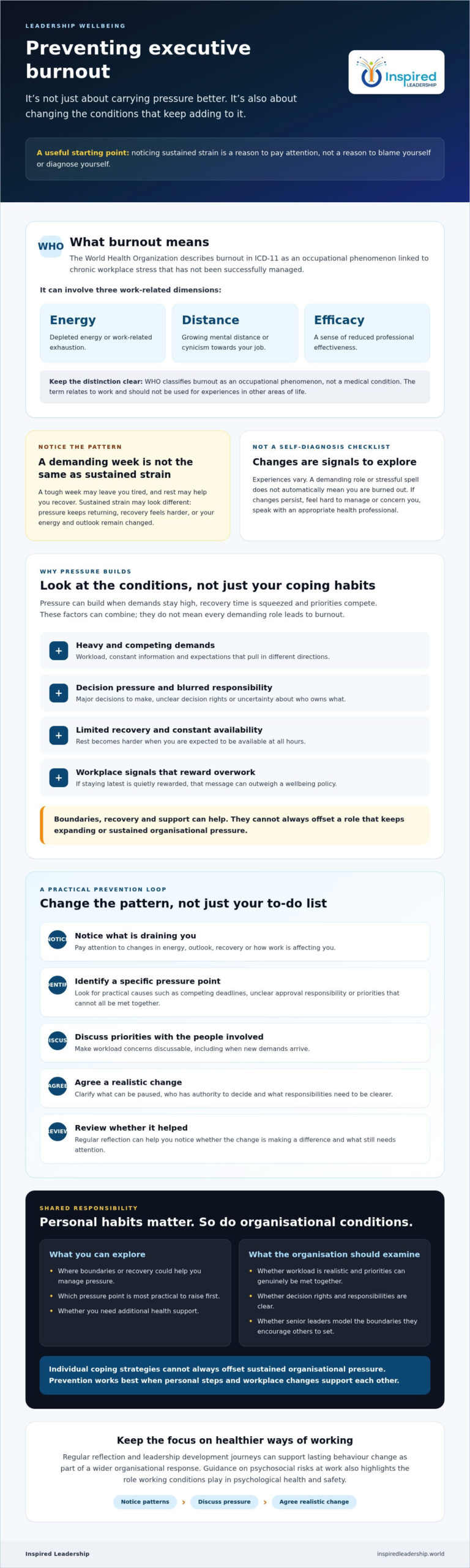
How to prevent executive burnout: practical steps for you and your organisation
Prevention works best when it changes the pattern, not just your to-do list. Start by noticing what is draining you, identify the pressure points, discuss priorities with the people involved, agree a realistic change, then review whether it helped.
For example, if a strategic project and a major operational deadline both need your attention, ask your team or manager to decide which takes precedence and what can move. Be clear about the trade-off and who needs to know. Adding a mindfulness break to a calendar already bursting at the seams is not a workload plan.
What you can change in your own leadership practice
Look at where your time and attention go. Could you delegate a decision, set clearer limits on availability, reduce unnecessary check-ins or protect time to recover? Identify one adjustment you can test, then notice whether it changes the pressure or simply shifts it elsewhere. Small adjustments can be useful, but they aren’t a guaranteed fix if the demands around you stay unchanged.
A trusted peer or colleague can help you spot habits you may not see from the inside. If you want a structured prompt for reflection, Inspired Leadership’s leadership assessment may help you examine your approach; it isn’t a diagnosis.
What to address with your organisation
Discuss role expectations, workload allocation and escalation routes with colleagues who can influence them. Be specific: which decisions need your input, what can be delegated, and who handles an urgent issue when you’re unavailable? When a new task arrives, ask what should be deprioritised rather than assuming everything can fit.
Systemic pressure needs an organisational conversation, not just another personal habit to maintain. Agree who will take each action and when you’ll review it. That gives preventing executive burnout a practical foothold in everyday leadership, without pretending one change will suit every role.
Explore the Beyond Command Journey and download its brochure
Make prevention part of how leaders work, not another wellbeing task
Prevention is more likely to become part of everyday leadership when reflection leads to visible action. Rather than adding another wellbeing task to your calendar, use existing team conversations to ask what is creating pressure, what can change and whether agreed changes are helping.
Turn insight into observable leadership behaviour
Choose practical behaviours your team can notice: clarify which priority comes first, invite challenge before a decision is final, or model sustainable boundaries by not treating every message as urgent. Agree what these behaviours look like in your context, then revisit them in regular discussions. Good intentions are a start, but follow-through is what people can see.
When a leadership development journey may help
If leaders need support turning insight into consistent behaviour, a structured development journey may form part of a wider organisational response. Explore the Beyond Command Journey and the Human Factor Journey as relevant leadership development options. These journeys can support reflection and action, but they aren’t clinical care or a stand-alone cure for burnout.
Inspired Leadership’s Senior Leadership and Executive Journeys are designed to connect leadership insight with action across organisations. For preventing executive burnout, that distinction matters: leaders can work on their behaviour while organisations also examine the conditions shaping it.
Explore the Beyond Command Journey and download its brochure to consider whether a leadership development journey could support your organisation’s wider response.
A steady, shared approach gives you a practical place to begin, without expecting one person or one change to solve everything.
Build healthier leadership into the way work gets done
Executive burnout can be difficult to name while the work keeps coming. Changes in your energy, outlook or sense of effectiveness are reasons to pause and seek appropriate support, not proof of a diagnosis.
Preventing executive burnout means looking at both sides of the equation: the habits that support recovery and the working conditions that shape pressure. Make priorities explicit, agree what can shift, then revisit those decisions to see whether they’re helping. Adding a wellbeing task to an unchanged workload isn’t much of a plan.
Inspired Leadership designs leadership development journeys for medium-sized enterprises, with a focus on translating leadership insight into action across organisations. A journey may support leaders as part of a broader response, alongside attention to the conditions that affect how people lead.
Start with one honest conversation about what needs to change. Sustainable leadership grows through practical adjustments, shared responsibility and follow-through, not by expecting you to carry everything a little more gracefully.
Frequently Asked Questions
What are the early signs of executive burnout?
Possible signs include ongoing energy depletion, growing distance or cynicism towards your work, and feeling less effective in your role. These reflect the World Health Organization’s description of occupational burnout, but they aren’t a self-diagnosis checklist. A difficult week can affect your mood and focus too. Pay attention to changes that persist or concern you, and consider speaking with an appropriate health professional.
Can executive burnout be prevented?
The risk can be reduced, but no personal habit or workplace measure can guarantee prevention. Preventing executive burnout means paying attention to both the demands of your role and the conditions around you. You might review priorities, protect opportunities to recover and raise competing demands with colleagues who can help make trade-offs. The right steps depend on your circumstances, so review what changes and adjust as needed.
Is executive burnout a medical condition?
The World Health Organization classifies burnout in ICD-11 as an occupational phenomenon, not a medical condition. It describes burnout as resulting from chronic workplace stress that hasn’t been successfully managed, with energy depletion, mental distance or cynicism, and reduced professional efficacy. That classification doesn’t mean your experience should be dismissed. If symptoms persist or worry you, speak with an appropriate health professional for advice.
How can an organisation help prevent executive burnout?
An organisation can examine whether workloads, role expectations and priorities are realistic, and whether leaders have clear decision rights and escalation routes. Make trade-offs explicit when new demands arise, rather than expecting people to absorb them alongside everything else. Senior leaders can also model sustainable boundaries and invite honest conversations about pressure. Review agreed changes over time, since individual coping habits alone may not address workplace contributors.
Does leadership development help prevent executive burnout?
Leadership development may help leaders reflect on their behaviour and translate insight into practical action, but it can’t guarantee burnout prevention or replace clinical care. Inspired Leadership designs leadership development journeys for medium-sized enterprises, including Senior Leadership and Executive Journeys. These may form one part of a wider organisational response, alongside attention to workload, priorities and other working conditions that affect how leaders lead.