

What if the behaviour disrupting your team is not just a discipline problem, but a signal that something at work needs attention? A sharp remark, a missed commitment or repeated refusal to cooperate can affect trust and performance. Managing counterproductive workplace behaviour starts with understanding what happened, not jumping to conclusions.
You may already know that disruptive conduct needs a response. The tricky part is working out whether you’re dealing with a one-off incident, a recurring pattern or a wider workplace issue, then acting without making things worse through an unfair or heavy-handed reaction.
This article explains what counterproductive workplace behaviour means, what can contribute to it and how to respond consistently, proportionately and with care. You’ll learn how to assess specific behaviour, its impact and the context around it, then follow up clearly to reduce the risk of the same problem recurring.
Key Takeaways
- Understand counterproductive workplace behaviour as conduct that affects work and colleagues, not a complete verdict on someone’s character.
- Explore possible influences such as unclear expectations or workload pressure without treating them as excuses or assuming they explain every incident.
- Make managing counterproductive workplace behaviour fairer by focusing on specific observations, their impact and clear follow-up actions.
- Reduce the risk of repeat behaviour by strengthening team expectations and communication, while recognising that manager development cannot replace fair systems.
What does counterproductive workplace behaviour mean?
Counterproductive workplace behaviour is voluntary conduct at work that harms, or is intended to harm, colleagues or the organisation. Organisational psychology uses the term to describe behaviour and its work-related impact, not to declare someone a bad person. The overview of Counterproductive work behavior (CWB) includes concepts such as workplace deviance and retaliation.
Examples can include deliberate withdrawal from work, repeated incivility towards colleagues, or using workplace resources for unauthorised personal purposes. Context matters: a disagreement, a single lapse or a legitimate challenge to a decision isn’t automatically misconduct. The label should help you examine what happened, not replace that examination.
How is counterproductive behaviour different from a mistake?
A mistake may happen because someone misunderstood an instruction, lacked a skill or was working under pressure. A capability gap calls for support or clearer guidance; a disagreement may simply reflect different views. These situations need attention, but they don’t by themselves show an intention to cause harm.
Repeated or deliberate conduct that undermines colleagues or work may warrant a closer look. Even then, don’t infer intent from impact alone: someone’s actions may cause real disruption without that being their aim. When managing counterproductive workplace behaviour, separate what you observed from what you suspect.
Who or what can the behaviour affect?
Some conduct is directed at people, such as belittling a colleague or retaliating after a disagreement. Other behaviour affects organisational work or resources, for example deliberately withholding information needed to complete a task or misusing shared equipment.
The effects can reach beyond the immediate incident. Colleagues may feel less safe speaking up, coordination may suffer, and work may be delayed or need correcting. Note who was affected and how, while keeping the focus on evidence, context and behaviour rather than making a sweeping judgement about character.
Why counterproductive workplace behaviour develops, and what managers should examine
Harmful conduct rarely has one simple explanation. Workload pressure, strained relationships, unclear expectations or a sense of unfairness may contribute, but these are possibilities to investigate, not excuses or proof of what caused a particular incident.
Context can inform your response without removing individual accountability. As you manage counterproductive workplace behaviour, keep observed facts separate from interpretations: “The report was submitted two days late” is an observation; “They’re trying to undermine me” is an assumption. That distinction helps you respond to evidence rather than a story that may not be true.
Can workplace conditions contribute to harmful conduct?
They can shape the conditions in which behaviour occurs. For example, conflicting instructions from two managers might leave responsibilities unclear, whilst inconsistent standards can create a perception of favouritism. An unresolved disagreement may also spill into day-to-day communication.
Check the specifics before drawing conclusions. Compare what was expected with what was communicated, look for relevant examples and consider whether similar friction is affecting other working relationships. A possible explanation is a lead to follow, not a finding.
When does a pattern need a different response?
A single, lower-impact lapse may call for a direct conversation and clarification. Repeated conduct, growing impact or serious harm needs a more considered response, with attention to previous incidents and the effect on people and work.
If concerns involve safety, discrimination or another serious matter, follow your organisation’s procedures rather than trying to resolve it informally on your own. Record what you know, avoid making promises about confidentiality you can’t keep, and involve the appropriate internal people.
Managers don’t need to diagnose motives to act fairly. They do need the confidence to ask clear questions, apply expectations consistently and recognise when a wider workplace issue needs attention. If you’re building that capability across your organisation, explore leadership development support.
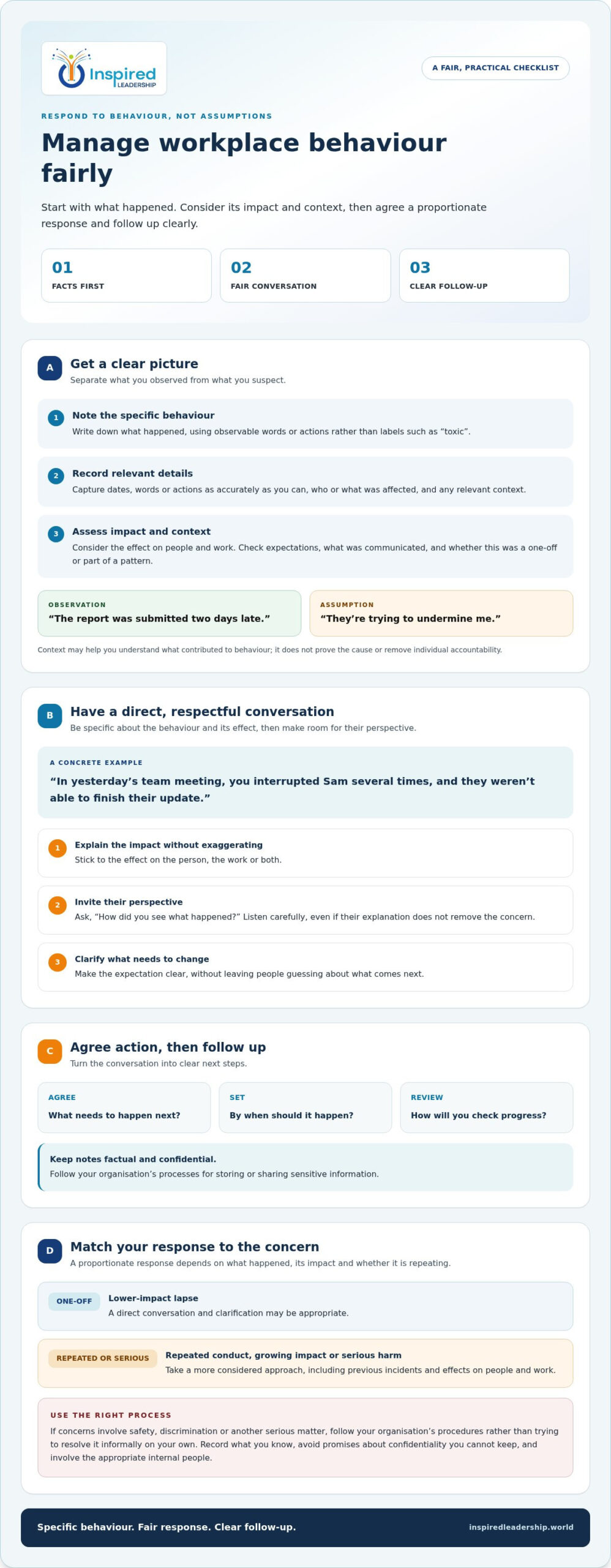
How to manage counterproductive workplace behaviour fairly
A fair response is calm, specific and consistent. Start by noting what happened, recording relevant details, assessing the impact, discussing the concern, agreeing proportionate action and following up. This gives you a practical structure, not a substitute for formal procedures where they apply.
Record dates, words or actions as accurately as you can, along with who or what was affected and any relevant context. Keep notes factual and confidential, and follow your organisation’s processes for storing or sharing sensitive information. Labels such as “toxic” or guesses about someone’s motives won’t help you establish what needs to change.
How should you address the behaviour in conversation?
Prepare one or two observable examples. You might say, “In yesterday’s team meeting, you interrupted Sam several times, and they weren’t able to finish their update.” Explain the impact without exaggerating it, then invite the employee’s perspective: “How did you see what happened?”
Listen carefully, even if the explanation doesn’t remove the concern. Clarify the expectation and agree what needs to happen next, by when and how you’ll review progress. When managing counterproductive workplace behaviour, a direct, respectful conversation is more useful than a vague warning that leaves everyone guessing.
How can you balance support with accountability?
Ask whether practical support could help, such as clearer priorities or guidance on a work expectation. At the same time, be explicit about the behaviour that must change and set a reasonable review point. Support should make improvement possible, not make the expectation disappear.
If the conduct is serious, repeated or covered by an established reporting process, use the appropriate organisational channels. Don’t promise complete confidentiality; explain that you’ll share information only as the relevant process requires. A consistent approach protects people and gives the employee a clear understanding of what happens next.
Build your manager-to-leader capability
Preventing repeat behaviour through stronger leadership practice
Once an incident has been addressed, look beyond the individual moment. Ask whether team expectations are clear, whether communication is respectful and consistent, and whether the same friction keeps surfacing. Managing counterproductive workplace behaviour also means noticing where everyday ways of working may be adding strain.
What can managers do before problems become patterns?
Make expectations visible in ordinary moments, not just after something goes wrong. Explain what respectful disagreement looks like, model it yourself and apply standards consistently. A rule that changes depending on who is speaking isn’t much of a rule.
Build regular opportunities for people to raise concerns, such as check-ins where you ask what is getting in the way of good work. Follow up on what you hear, even if the answer is that you’re still looking into it. Trust grows when people see that speaking up leads to attention, not a tumbleweed.
How can leadership development support consistent action?
Manager development can help leaders reflect on their habits, practise difficult conversations and follow through in real workplace situations. But capability-building has limits: it can’t compensate for unclear expectations, inconsistent processes or unfair systems. Managers need organisational support to turn insight into dependable action.
A human-centred leadership journey can help managers pay closer attention to trust and the effect of everyday interactions. For practical development in the manager role, explore the manager-to-leader journey, where reflection can connect with the realities leaders face at work.
Turn fair responses into stronger everyday leadership
Managing counterproductive workplace behaviour means looking at both the conduct and its impact, without rushing to judge someone’s character or guess at their motives. A fair response starts with clear evidence, a respectful conversation and proportionate follow-up.
To reduce the chance of problems recurring, make expectations clear, pay attention to repeated friction and create space for concerns to be raised early. Manager capability matters, but it works best alongside consistent and fair workplace systems.
Leadership journeys can help translate insight into action and develop leadership capability across teams and organisations. Take the next step by exploring the manager-to-leader journey and downloading its brochure.
With clear expectations and thoughtful leadership, you can address concerns with care while helping your team move forward with greater trust.
Frequently Asked Questions
What is counterproductive workplace behaviour?
Counterproductive workplace behaviour is voluntary conduct at work that harms, or is intended to harm, colleagues or the organisation. It describes actions and their effects, not a person’s whole character. For example, repeated behaviour that disrupts colleagues’ work may need attention, but you should consider the evidence and context before deciding what it means. One mistake or disagreement alone doesn’t establish a pattern.
What are examples of counterproductive behaviour at work?
Examples can include repeated incivility, deliberately withdrawing effort, retaliating against a colleague or misusing workplace resources. Withholding information someone needs to do their job may also undermine work. Context matters: a missed deadline could reflect a mistake or unclear priorities, rather than deliberate withdrawal. Focus on what happened, how often it occurred and its impact before labelling behaviour.
How should a manager deal with counterproductive behaviour?
Managing counterproductive workplace behaviour fairly means recording specific observations, assessing their impact and discussing them directly with the employee. Invite their perspective, explain the expectation and agree proportionate next steps and a review point. Keep information appropriately confidential and follow your organisation’s procedures. If the concern is serious or repeated, use established channels rather than relying only on an informal conversation.
Can workplace culture contribute to counterproductive behaviour?
Yes, workplace conditions may contribute. Unclear expectations, inconsistent standards, strained relationships or heavy workload pressures can create friction and influence how people behave. They don’t prove why a particular person acted as they did, and they don’t remove accountability. Look for evidence, such as recurring confusion over responsibilities or similar tensions across a team, before deciding whether wider changes are needed.
Is counterproductive workplace behaviour the same as workplace conflict?
No. Workplace conflict can arise from different views, priorities or misunderstandings, and disagreement isn’t automatically harmful conduct. Counterproductive workplace behaviour refers to voluntary actions that harm, or are intended to harm, colleagues or the organisation. Conflict may involve such behaviour, but it may also be handled respectfully and lead to useful discussion. Assess the specific actions and their effects, rather than treating every dispute as misconduct.