

HR doesn’t earn influence by having the best people policy in the room. Inspiring HR leadership means helping people see how better decisions for employees can also support the organisation’s priorities. If you’ve ever felt that HR is treated as a process function until something goes wrong, you’ll know why trust matters.
You don’t need louder advice or another motivational slogan. You need practical ways to build credibility, bring the people perspective into decisions leaders can act on and make the case for change without losing sight of commercial realities.
This article explores the everyday behaviours that make your influence last: listening closely, communicating clearly and following through consistently. You’ll also learn how to help colleagues take ownership, so progress doesn’t depend on HR carrying every change. The aim is simple: turn shared intentions into meaningful action, one credible conversation and decision at a time.
Key Takeaways
- Practise inspiring HR leadership through credible, human-centred influence, not charisma or motivational slogans.
- Build trust by listening carefully, explaining your reasoning and following through consistently.
- Frame people insight around the decision, who it affects and the practical options, while making space for employee voices.
- Reflect on whether people feel heard, decisions are clear and agreed actions have owners, then seek perspectives over time.
What Does Inspiring HR Leadership Look Like in Practice?
Inspiring HR leadership is credible, human-centred influence that helps people understand a challenge, make considered decisions and take purposeful action together. It connects employee needs, organisational culture and business choices without treating people as items on a process map.
That distinction matters. Inspiration isn’t a magnetic personality, a string of upbeat slogans or a job description that makes you responsible for everyone’s motivation. It’s visible in what you do: how you listen, explain decisions and help others take ownership. For a broader overview of the field’s functions and strategic role, see Human Resource Management.
Why HR leadership can feel different from other leadership roles
You’re often holding two valid needs at once: advocating for people and engaging with the organisation’s priorities. Neither disappears just because the conversation gets tricky.
Imagine leaders want to change shift patterns to meet demand, while employees are concerned about disruption to caring responsibilities. An inspiring HR leader doesn’t dismiss either side or promise everyone their preferred outcome. You bring the concerns into the decision, clarify the constraints and help the group compare workable options. For example, you might discuss different ways to phase a change and agree how its impact will be reviewed.
Can you learn to become an inspiring HR leader?
Yes. You don’t need to become the loudest or most naturally charismatic person in the room. You can practise behaviours that make your leadership more credible: asking thoughtful questions, explaining your reasoning plainly and doing what you said you’d do.
Reflection helps turn good intentions into repeatable actions. After a difficult conversation, ask yourself: did I understand the concern, make the trade-offs clear and leave people knowing what happens next? Consistent practice won’t guarantee agreement, but it can help you build trust and influence over time.
If you want to strengthen these behaviours as part of your organisation’s wider leadership development, explore leadership development with Inspired Leadership.
How to Build Trust as an Inspiring HR Leader
Trust isn’t built by saying, “My door is always open,” then looking startled when someone walks through it. It grows through a dependable sequence: listen carefully, clarify what’s happening, explain your reasoning and follow through on what you’ve agreed.
Credibility grows when your follow-through matches your words, especially when the next step is difficult or takes time. Confidentiality, fairness and consistency are part of that follow-through. Be clear about what you can keep private and where information may need to go, apply the same care to different people, and don’t promise an outcome you can’t control. Resources such as the Federal HR Leading Practices can offer another perspective on thoughtful HR practice.
How can HR leaders listen without rushing to fix everything?
Start with open questions: “Can you talk me through what happened?” and “What feels most important to resolve?” Then summarise what you’ve heard and check you’ve understood. This gives the person room to add context before you leap into solution mode. A pause isn’t a failure of leadership; it’s often where useful detail finally appears.
Separate the feeling from the event and the possible response. For example, an employee may feel overlooked after stretch opportunities go to colleagues. Acknowledge the frustration, clarify how decisions were made and explore what action could address the concern, without promising a particular role or outcome.
How to communicate difficult decisions with humanity
Explain the decision in plain language, including the reason behind it. If a decision about team responsibilities can’t change, say so, acknowledge its effect and invite questions. Avoid using policy language as a shield; it may explain a boundary, but it doesn’t replace a human conversation.
As you practise inspiring HR leadership, notice whether you’ve made the next step clear, then deliver it. For organisations looking to develop leadership behaviours more broadly, leadership development journeys from Inspired Leadership can help connect reflection with action.
How to Influence Decisions and Give People a Voice
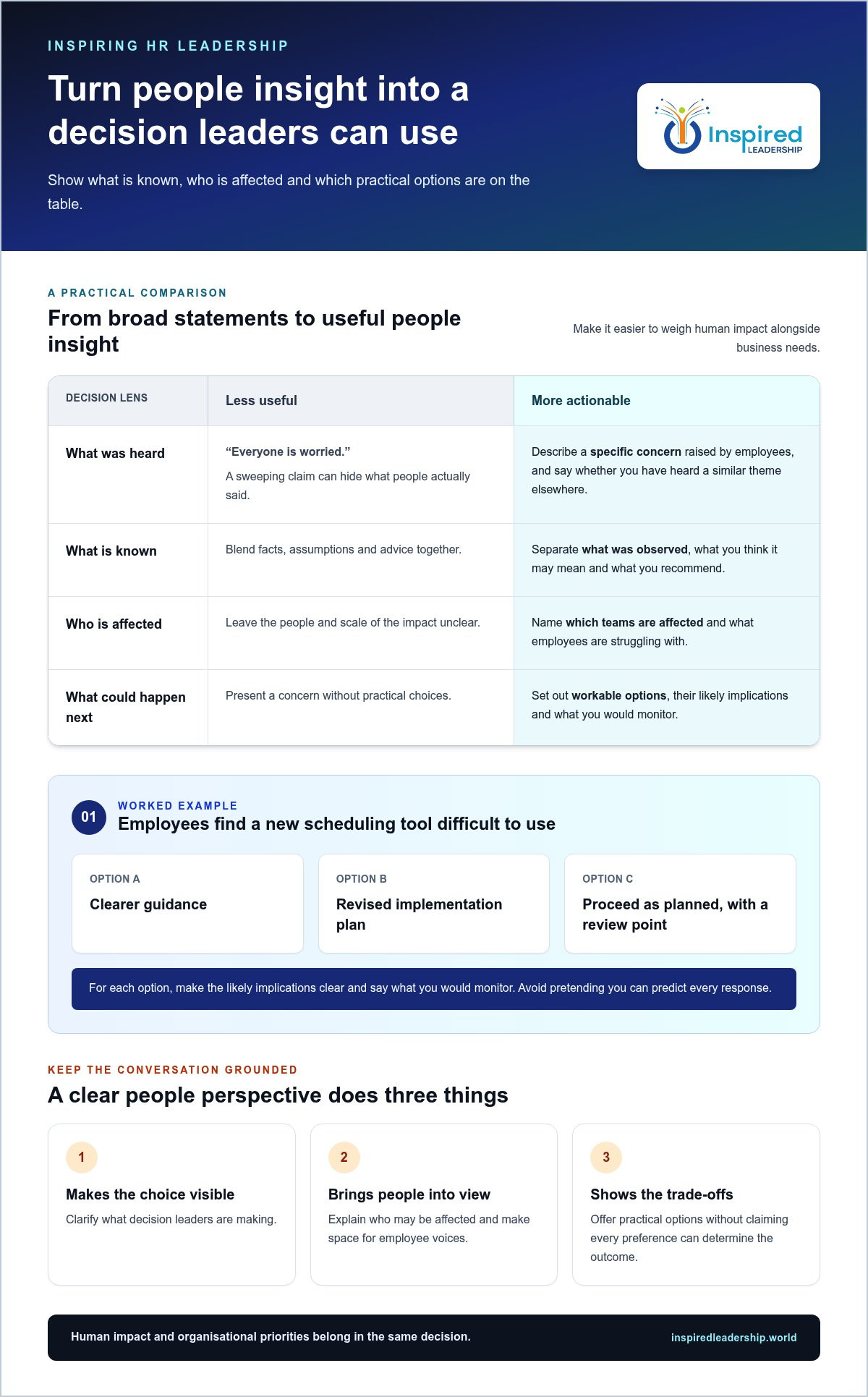
People insight becomes influential when it helps decision-makers understand what choice they’re making, who will be affected and what practical options are available. HR connects employee experience to organisational decisions so leaders can weigh human impact alongside business needs.
That doesn’t mean every preference can determine the outcome. It means people have a meaningful chance to contribute, and leaders can see likely trade-offs before they decide. The practical work of inspiring HR leadership is making that connection clear without claiming to speak for everyone.
How to make the people perspective actionable
Be precise about what you know. Instead of saying, “Everyone is worried about the change,” describe a specific concern raised by employees and whether you’ve heard a similar theme elsewhere. Then distinguish what was observed, what you think it may mean and what you recommend. This gives decision-makers room to test your interpretation rather than dismissing a sweeping claim.
For example, if employees say a new scheduling tool is difficult to use, explain what they’re struggling with, which teams are affected and what you’ve heard about the cause. You might outline options such as clearer guidance, a revised implementation plan or proceeding as planned with a review point. For each option, state the likely implications and what you would monitor, without pretending you can predict every response.
How to build ownership beyond the HR team
Once a decision is made, agree who will do what. HR might share themes and help managers plan conversations, while managers explain the decision to their teams and colleagues identify practical issues as the change unfolds. Give each action an owner and a way to report back on what’s working or needs attention. HR can support the process without becoming the default owner of every task.
For a people-centred perspective on leadership, explore the Human Factor Journey.
How to Make Inspiring HR Leadership Visible Through Action
Inspiring HR leadership is easier to strengthen when you look beyond how busy you’ve been. A full calendar, a completed consultation or a well-received presentation shows activity, but not necessarily that people understand what happens next or feel able to contribute.
Make reflection part of your regular practice. Ask yourself: do people understand the reasons behind decisions? Have affected colleagues had a genuine opportunity to share their perspective? Are agreed actions clear, with someone responsible for each one?
What signs suggest your leadership is building ownership?
Look for clearer shared expectations, constructive questions and colleagues following through on agreed responsibilities. These are useful prompts for discussion, not proof that one action caused a particular result. Ask managers and employees what they’ve noticed over time, and compare perspectives rather than relying on one self-rating or memorable anecdote.
If feedback suggests people are unclear about an action, treat that as useful information, not a personal verdict. Clarify the next step, agree who owns it and revisit whether understanding has changed. The aim is to learn and adjust, not to manufacture a glowing scorecard.
When can a structured leadership journey help?
When reflection needs to become a sustained habit, a leadership journey can connect practice with the priorities people are working towards. Inspired Leadership’s Manager to Leader Journey is designed to develop leadership capability through ongoing application, rather than a brief burst of inspiration.
Use the journey to consider which behaviours you want to practise and how colleagues can share responsibility for progress. That keeps development connected to everyday work, where leadership is visible in the conversations, decisions and follow-through people experience.
Turn People Insight into Lasting Influence
Inspiring HR leadership isn’t about having every answer or carrying every change yourself. It’s about building trust through consistent actions, bringing employee perspectives into decisions and helping colleagues take ownership of what happens next.
Start with one practical step: reflect on whether people understand the reasoning behind a decision, feel heard and know who owns the agreed actions. Then keep listening and learning, because lasting influence grows through repeated behaviour, not a single impressive moment.
Inspired Leadership designs leadership journeys for medium-sized enterprises, building leadership capability and translating insight into action across organisations. If you’re looking to develop leadership practice through sustained application, the Manager to Leader Journey offers a practical next step.
Every thoughtful conversation and clear follow-through can help turn shared intentions into meaningful progress. You can make that influence count.
Explore the Manager to Leader Journey and download its brochure.
Frequently Asked Questions
What makes an HR leader inspiring?
An inspiring HR leader earns trust through consistent, thoughtful behaviour. They listen carefully, explain decisions clearly and connect employee experience with organisational priorities. This is inspiring HR leadership in practice: helping people understand what matters, contribute meaningfully and take responsibility for agreed actions. Charisma may catch attention, but credibility comes from what you do repeatedly.
How can HR leaders inspire employees?
HR leaders can inspire employees by showing that their experiences have been heard and understood. Explain the purpose behind decisions, make room for questions and follow through on commitments. You can’t promise that every request will be accepted, but you can explain how people’s input was considered and what happens next. Clarity and care matter, especially when the answer isn’t the one someone hoped for.
Can leadership skills be learned by HR professionals?
Yes, HR professionals can practise and strengthen useful leadership behaviours. Start with one, such as active listening, clear communication or constructive challenge, then seek specific feedback and reflect on what changed in the conversation. Treat development as ongoing practice, not a single moment of inspiration. A leadership journey can help you connect reflection with consistent action over time.
How can HR leaders influence senior decision-makers?
Connect the people perspective to the decision leaders need to make. Explain whose experience is affected, separate observed evidence from your interpretation, then present practical options and their trade-offs. For example, when a proposed change raises concerns for a particular team, describe those concerns and outline possible ways forward. Keep listening after the decision so its effects can inform future action.