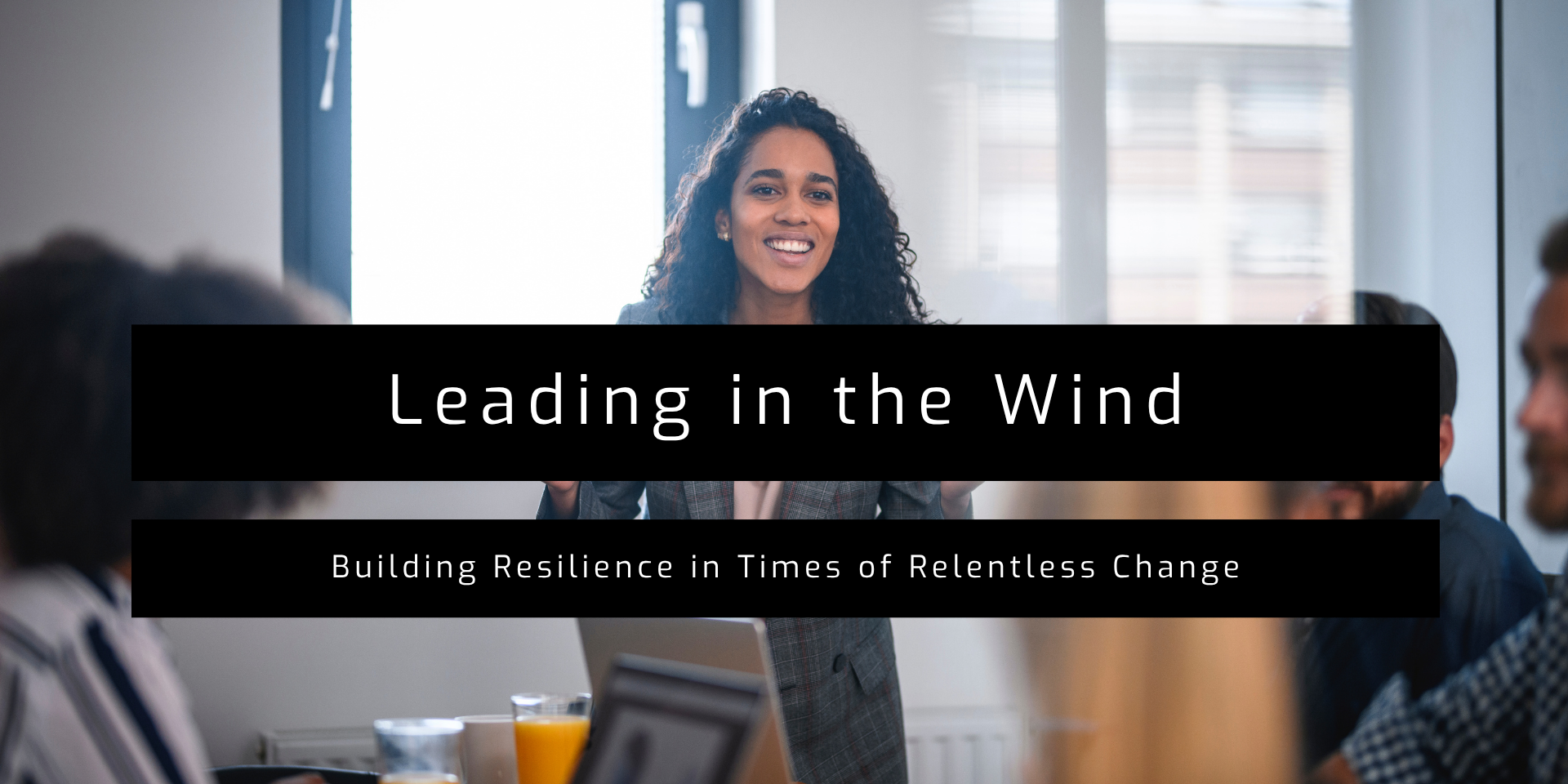
I had a conversation this week with one of our participants who sighed and said, “I just wish things would settle down.” And it struck me: waiting for stability is not an option.
Two out of three business leaders believe disruption will accelerate in the second half of 2025. Company lifespans, once measured in decades, are shrinking rapidly. McKinsey has even predicted that by 2027, three out of four companies currently listed on the S&P 500 will have disappeared.
Technology is the driver. The telephone took nearly 100 years to reach mass adoption. The internet did it in 15. Tablets jumped from 0% to 50% adoption in just five years. And AI? Its pace is even faster. Add to that the startling fact that 90% of the world’s data was created in just the past two years. The winds of change aren’t just blowing, the wind is howling.
This is no longer a season of change. This is the climate.
From Sprint to Marathon
Leaders often think of change as a sprint: a new system implemented, a policy rolled out, an acquisition completed. There’s a beginning, a messy middle, and a sigh of relief at the end.
But what we’re living through now isn’t a sprint. It’s a marathon — more like the Comrades than a 100-metre dash. It requires endurance, including building muscles, finding a pace, running with others, and avoiding “mechanical failure” or “structural fatigue.”
Lessons from the Wind
Walk along Cape Town’s Sea Point Promenade and you’ll see trees growing sideways into the gale. They’re not broken – they’ve adapted.
Wind turbines do the same. They don’t fight the wind; they use it. They spin slowly, by design – to prevent damage, reduce noise, protect wildlife, and avoid collapse under pressure.
That’s resilience. Success is not about standing still against the wind or resisting it.. It’s about learning to work with it.
Mind the Gap: Expectation vs. Reality
The biggest source of fatigue isn’t the pace of change. It’s the gap between what we expect and what we experience. For years, we assumed that after the change, things would “settle down.” But that expectation is now the enemy.
When we expect calm and get chaos, our brains trigger the fight–flight -freeze response. Anxiety, resistance, and exhaustion follow.
The first step in resilience is closing the gap: accepting that constant change is the terrain. When we normalise change, we free our minds from wasting energy on the question, “Why is it windy?” and instead ask, “What will help me thrive in the wind?”
Rewiring the Brain: Thoughts, Emotions, Actions
The good news is our brains can adapt. Neuroplasticity enables our brains to rewire and adapt, creating new pathways and more constructive responses.
One practical tool is TEA — Thoughts, Emotions, Actions.
- A trigger occurs (the wind blows, e.g. a project scope shifts).
- A thought follows: “This is awful. I can’t stand it.”
- That thought creates an emotion: irritation, dread.
- The emotion drives the action: avoidance or resistance.
If we pause, catch the thought, and reframe it — “The wind is part of life. I can adjust.” — then emotions shift (e.g. neutral at worst, energised at best), and so do actions (e.g. ask curious clarifying questions, or highlight possible risks and contingencies).
This is the essence of self-leadership: intentionally influencing our thoughts, feelings, and actions toward our objectives.
Fuel for Endurance: Purpose
Even using tools like TEA, endurance requires fuel. That fuel is purpose.
When we connect our work to a deeper meaning, our brains reward us with motivation. Purpose gives us the “why” that sustains us through the “how.” Viktor Frankl described it as the last of the human freedoms: the power to choose one’s attitude in any circumstance. Friedrich Nietzsche echoed it: “He who has a why to live for can bear almost any how.”
Purpose is what helps a stroke survivor re-learn to ride a bike, or a janitor at NASA declare with pride, “I’m helping put a man on the moon.” It’s the meaning-making muscle that keeps us upright in the wind.
The Call
So here’s the challenge: stop waiting for the storm to pass. Adjust your expectations, reframe your thoughts, and root yourself in a deeper purpose.
The wind isn’t going to change. But you can.